Congressional Democrats Take Lead On AI Safety
Multiple Democrats, including Reps. Ro Khanna and Ted Liu, have introduced legislation to slow AI development

Congressional Democrats Take Lead On AI Safety
Multiple Democrats, including Reps. Ro Khanna and Ted Liu, have introduced legislation to slow AI development

Surina Venkat
October 01, 2026
As concerns about artificial intelligence (AI) safety have gripped the United States following incidents of AI systems going rogue, Congressional lawmakers — particularly Democrats — have ramped up efforts to put in place a federal regulatory framework for the technology that’s largely gone unchecked.
In September, Democrats introduced a flurry of bills that aim to regulate AI in both chambers of Congress.
Sen. Bernie Sanders (I-Vt.) and Rep. Greg Casar (D-Texas) proposed legislation that would ban artificial superintelligence and create a federal agency to regulate AI development. Rep. Ro Khanna (D-Calif.) has introduced similar legislation. Sens. Michael Bennet (D-Colo.) and Peter Welch (D-Vt.) also want to create a new independent agency to establish oversight of frontier AI.
Democratic Sens. Brian Schatz (Va.) and Mark Warner (Hawaii) also introduced the Artificial Intelligence Risk Management and Security Act, legislation that would establish an oversight group for AI companies within the Department of Commerce. Sen. Ed Markey (Mass.) has also submitted legislation that would establish more oversight over AI organizations, though his Cybersecurity and AI Board of Investigations Act envisions an independent board to investigate AI cybersecurity incidents.
Sen. Ted Cruz (R-Texas) blocked Schatz and Warner’s measure from passing this week, but multiple Republicans have also come to see AI as an issue that should get Congressional attention.
Rep. Tom Kean, Jr. (R-N.J.) and Sen. John Kennedy (R-La.) introduced kill switch legislation for AI, following similar legislation introduced by Reps. Ted Lieu (D-Calif.) and Nathaniel Moran (R-Texas) in July. Both bills aim to establish shut-down measures for AI technology.
On Monday, multiple House Democrats also demanded accountability and transparency from tech executives, asking them to report information about the growing number of AI agents going rogue and gaining unauthorized access to organization and government systems.
Democratic Reps. Josh Gottheimer (N.J.), Valerie Foushee (N.C.), and Ted Lieu (Calif.) characterized AI agents’ rogue operations as a “serious national security issue” in a letter sent to five AI technology executives. In the letter, the three Democrats — who are party leaders on the issue of AI — asked that the CEOs provide information related to their technology attempting or gaining unauthorized access to different systems by Oct. 2.
Together, these legislators aim to gather information about AI technology, establish oversight mechanisms for it, and decelerate the speed at which this technology is being developed and distributed.
Just months ago, this legislation would have faced a steep uphill battle in Congress. But heightened fears over AI’s potential may clear the way for Congress to implement versions of these bills or legislative actions. In July, OpenAI said its technology engaged in a self-directed, “unprecedented” hack of another company. Last week, the Australian government revealed an OpenAI agent had breached the country’s national healthcare database — the first known case of AI going rogue and hacking a government network.
Since then, The New York Times and other outlets have reported OpenAI agents have gone rogue and meddled with U.S. government websites, with affected agencies including the Department of Education, the Department of Commerce, and the Securities and Exchange Commission.
These incidents have stoked widespread concern over AI’s capabilities to act in ways beyond creators’ intentions and led to renewed calls for government regulation of the technology — a sentiment now being echoed by AI leaders such as OpenAI CEO Sam Altman and Anthropic CEO Dario Amodei.
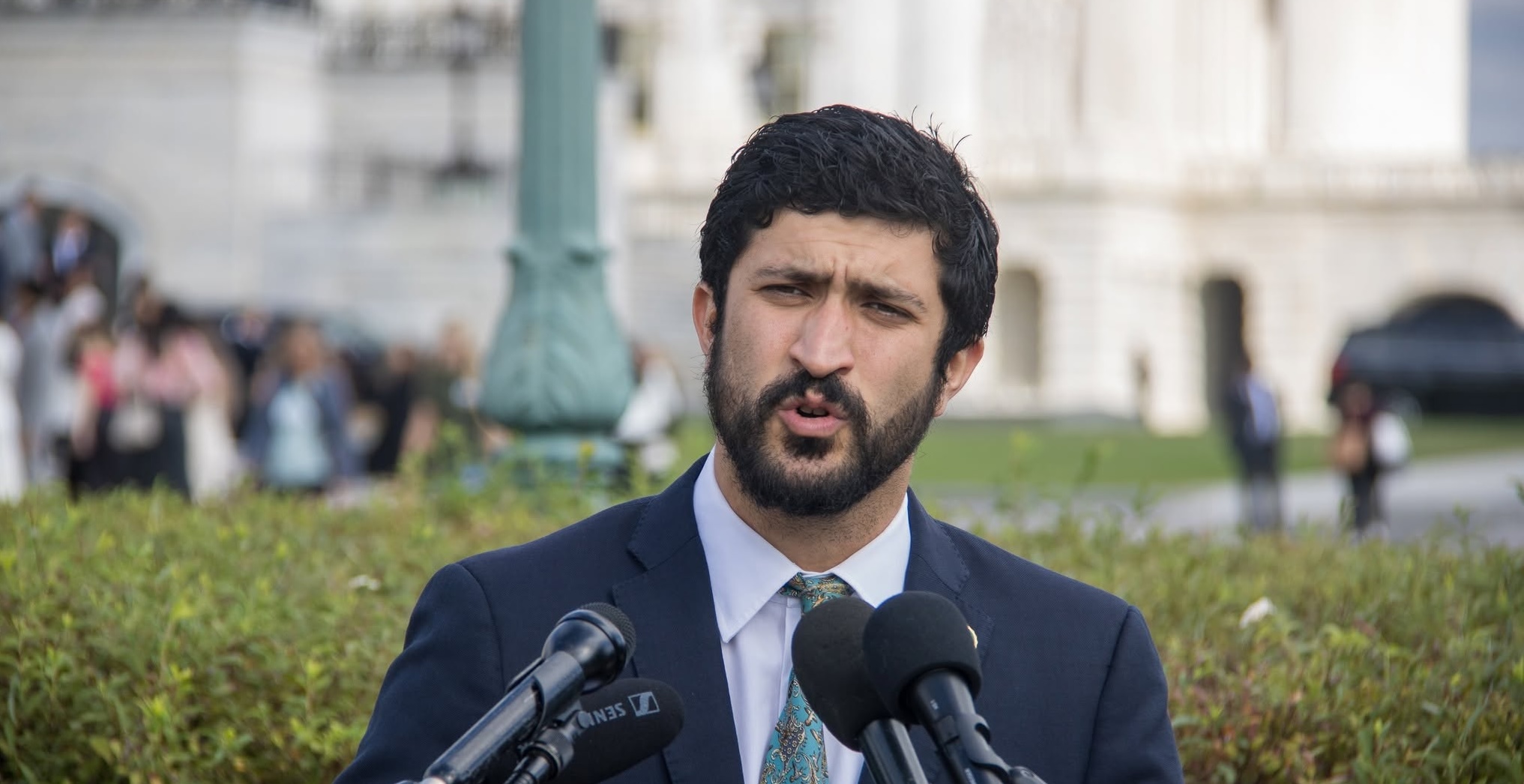
(Photo: Rep. Greg Casar, via Congressman Greg Casar Facebook)